-
THE VISIONARY: HANK EBES
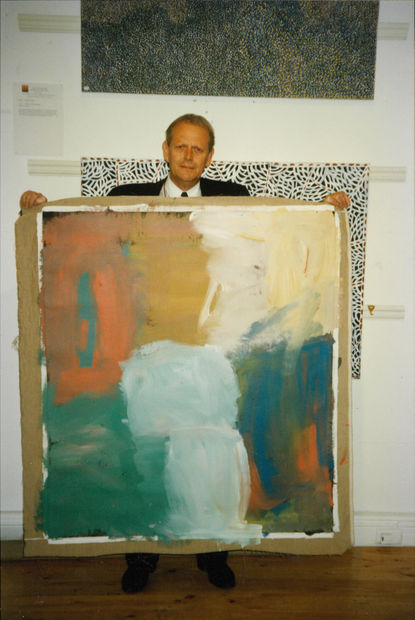
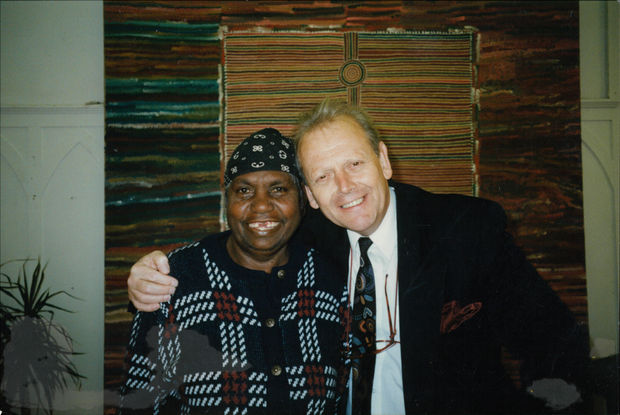
FOUNDER OF THE ABORIGINAL GALLERY OF DREAMINGS (AGOD)Hank Ebes is the driving force behind the Aboriginal Gallery of Dreamings (AGOD), a man whose life has been defined by curiosity, courage, and an unwavering passion for Aboriginal art. From the moment he first encountered works from Central and Western Desert artists, Hank recognised something extraordinary: art that was not merely decorative, but a living, breathing language of culture, ancestry, and country. He saw in these paintings a visual history spanning tens of thousands of years—a record of law, Dreamtime stories, and communal memory expressed in patterns, symbols, and colour.
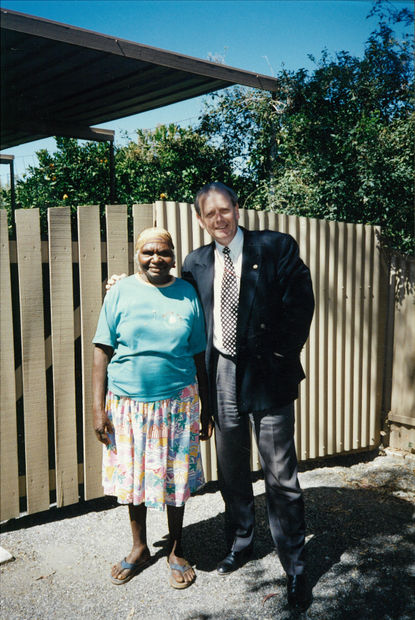
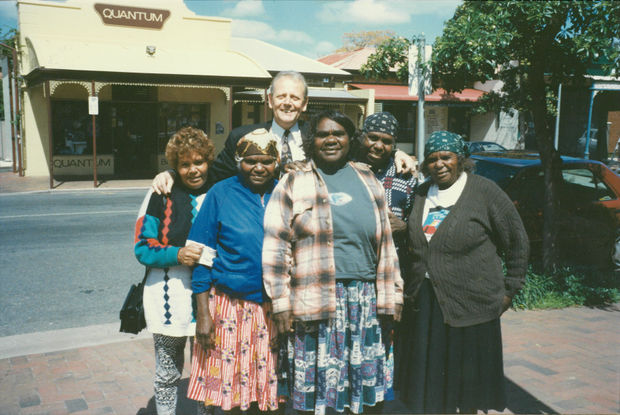
Hank’s engagement with Aboriginal art was both personal and professional. He was not content to simply collect; he sought to understand the stories, the people, and the communities behind each painting. In doing so, he became an advocate not just for the art itself, but for the artists who created it, recognising their work as vital contributions to contemporary culture and global art history. Hank approached Aboriginal art with the respect and sensitivity that it demanded, learning the intricate relationships between land, family, and Dreaming stories, while ensuring artists retained control over their work and its representation.
-

-
Where it all began
Foundations in Bourke Street (Melbourne) & Alice springsThe story of the Aboriginal Gallery of Dreamings (AGOD) begins in Melbourne, at the bustling heart of Bourke Street, where Hank Ebes opened the gallery in the early 1990s. At the time, Aboriginal art was largely overlooked by mainstream Australia. Galleries were few, collectors were hesitant, and the cultural significance of Indigenous painting had yet to be fully acknowledged beyond small academic or specialist circles. Hank’s decision to open a gallery dedicated solely to Aboriginal art in such a prominent urban location was both audacious and visionary. It was a deliberate choice, reflecting his commitment to making this art visible, accessible, and appreciated by a broad audience.
From the outset, the Bourke Street gallery was not just a commercial space—it was a hub of cultural engagement. Hank cultivated relationships with artists and their communities, ensuring that the works on display carried the authenticity and provenance essential to preserving their significance. Through carefully curated exhibitions, AGOD introduced Melbourne audiences to the breadth and diversity of Aboriginal art, from early works of Central and Western Desert artists to the emerging contemporary voices transforming the movement. The gallery quickly earned a reputation not only for the quality of its collection but also for the respect and sensitivity with which it represented artists and their stories.
The success in Melbourne soon inspired expansion to Alice Springs, a city geographically and culturally closer to the heartlands of the Central and Western Desert artists. Establishing a presence in Alice Springs allowed Hank and AGOD to foster direct connections with artists, visiting their communities, engaging with elders, and witnessing the landscapes that inspired the works. The gallery became a meeting place where artists, collectors, and curators could engage in meaningful dialogue about the art, its significance, and the cultural narratives embedded within each piece.
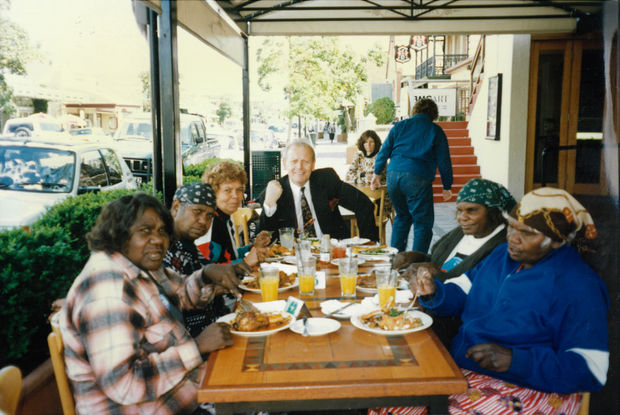
During this period, AGOD attracted visits from some of the most renowned Aboriginal artists, creating an atmosphere of exchange and collaboration that was rare at the time. The Alice Springs gallery became a centre of creativity and cultural preservation, allowing works to be exhibited in a context that honoured their origin while simultaneously introducing them to national and international audiences.
Together, the Bourke Street and Alice Springs galleries exemplified Hank’s dual vision: to educate and inspire audiences in Australia’s urban centres while maintaining strong, respectful relationships with the artists and their communities. These foundations laid the groundwork for AGOD’s later international reach and enduring reputation as a gallery of both cultural and artistic significance.
-
images of bourke st & alice springs galleries
-
"A BRIEF HISTORY OF AGOD"
Written By: Hank Ebes (1997)My first direct involvement with the art of Utopia was in April 1990. What was to be a journey of discovery to satisfy a curiosity sparked by the acquisition of some Central Desert paintings by Malcolm Jagamarra Maloney and friends in Melbourne, included an invitation to visit Delmore Downs, located just south of Utopia. Of the 120 acrylic paintings on canvas collected during that trip, more than 100 were from Utopia and included some of the earliest works produced. An additional 250 were purchased sight unseen only a few weeks later to form the foundation on which the Aboriginal Gallery of Dreamings was built; our first major international exhibition was largely selected from these early works.
At that time, the images of the distinctive Utopia style were not as well known as those made famous by superstars like Clifford Possum Tjapaltjarri, who featured on the cover of the World Bank (Washington DC) exhibition catalogue in March 1992. Through this exhibition some of the paintings were sold, but most were exhibited a year later at the Washington DC Children’s Hospital and subsequently in an exhibition at the Very Special Art Gallery in Georgetown. Now, five years later, they are available for exhibitions in the United States or can be seen by appointment at our gallery in Richmond, Virginia.
As the recognition of Utopia grew, so did our gallery and stock. Local representatives, agents and field officers set out to collect, commission and purchase art when and wherever available. Unlike their non-Indigenous colleagues, Aboriginal artists cannot be tied down to one agent or gallery. To secure an exclusive supply in artistic monopoly would be detrimental and restrictive to the artist. The competition for the outstanding works of the most celebrated artists often resulted in tensions between agents and galleries. Rather than working together to promote and increase awareness of the movement, rivalries sometimes fuelled speculation and fed the press with controversy, when in truth the art itself spoke of integrity and brilliance. Yet despite this, nothing has diminished the popularity of Aboriginal art worldwide.
One of the most powerful and influential voices to emerge from Utopia was octogenarian artist Emily Kame Kngwarreye. Until her passing on 2 September 1996, aged about 86, Emily was respectfully referred to as Kwementeye (pronounced Koo-man-tjai) Kngwarreye to and by family according to ancient customs. Kwementeye means “a name not to be used” and remains in force in the family forever. But Emily, as she was known in the art world, was a legend in her own lifetime and loved by many for her brilliant works.
Not many of the customs sacred to Aboriginal people will ever be fully understood by non-Aboriginal Australians. Accordingly, misunderstood compliance with cultural law can easily lead to missteps in broader society. The best way to learn about the customs and feelings of Aboriginal people is to simply ask them and then listen carefully.
Greeny Purvis is regarded as one of the most important elders at Utopia. He is a brilliant artist in his own right and carries the quiet wisdom of the ages. His position at Utopia is undisputed. To Emily and her family, Greeny is “the owner” of the land — the man responsible for its well-being, for passing on the laws, and for the secret/sacred stories of the Dreaming. His influence on Emily and her art is legendary, and without his permission there would not have been any art.
I had the privilege to meet Greeny and his daughters while visiting Emily for the first time in October 1994. I specifically wanted to photograph Emily for the planned exhibition catalogue of Nangara, and discuss with her — through multilingual “daughter” Barbara Weir — the paintings to be featured, including the 53-panel installation known as the Emily Wall.
After a day of driving around many camps and Emily’s “country,” during which she talked about her paintings and their meanings, found wild honey for us to taste, and allowed me to video and photograph her (as long as I promised to only publish the “pretty” ones), Emily insisted we pay our respects to Greeny. That meeting added two more paintings to the Nangara collection. One magnificent work by Greeny came with a note attached saying “Greeny insists that this is a very special painting for the private collection and not to be sold.” The other was a collaborative work commissioned at the meeting with Greeny and Emily. Both feature at the beginning of the Emily section of 87 of her paintings in the Nangara catalogue, published in March 1996 for the inaugural exhibition in Brugge, Belgium.
When Emily passed away after a short illness with pneumonia in Alice Springs hospital, Utopia and her family went into “sorrow business,” a complicated and lengthy ritual of mourning involving several hundred members of her extended family. Out of respect, her name was not to be spoken, her works were not to be seen, and photographs of her face were not to be published. Major galleries covered her works with black cloth or removed them from public exhibitions, while newspapers respectfully avoided her image if not her paintings, calling her Kwementeye or simply Kngwarreye.
Known to thousands in Australia and internationally as “Emily,” or Emily Kame (meaning yam or wild potato) Kngwarreye, her distinctive works in many styles became some of the most sought after in the art world. Books were published about her, the Queensland Art Gallery planned a retrospective, and her works were included at the Venice Biennale in June. Her fame had spread far beyond the limits of tribal law.
At about 1.2 metres tall, her physical stature was smaller than the average size of her paintings — yet the shadow she cast was immense. She changed the face of Aboriginal art, capturing the contemporary abstract art market and converting skeptics by the thousands. Long-established Western art galleries that had never ventured into Aboriginal art soon sought her works for exhibitions, where she was billed as “Emily Kame Kngwarreye, Artist,” and widely recognised as Australia’s most celebrated and highly valued painter.
Emily was brilliant, mature and unique, with a practice that remained deeply rooted in Country and culture. She painted in a style without Western influence, which evolved regularly yet retained an unmistakably individual signature throughout her career. In just eight years of painting on canvas she created an estimated 3,500 works.
Because of Emily’s fame, several other gifted Utopian artists were often overlooked. Close friends and family like Barbara Weir, Gloria Petyarre and Nancy Kunoth Petyarre loved their Aunty Emily dearly, but sometimes worked in her shadow. Now, however, Barbara’s intricate body paintings — large canvases filled with thousands of micro dots applied with patience and precision — are receiving the attention they deserve. Equally brilliant are the stark white-on-black body paint designs of Nancy Kunoth, and the multicoloured Same Dreaming patterns by Gloria Petyarre, created in an endless variety of forms.
These women are carrying forward the tradition. They will always be connected to their Country but are venturing further with their new freedom. Like Emily, their works now feature prominently in both Aboriginal and Western art galleries, taking their rightful place in Australia’s cultural heritage.
-
GLOBAL RECOGNITION THROUGH INTERNATIONAL EXHIBITIONS
From the early 1990s, Hank Ebes recognised that Aboriginal art was not only of immense cultural importance within Australia but also possessed a universal resonance that could captivate audiences around the world. Guided by this vision, AGOD embarked on a series of international exhibitions that would not only elevate the profile of the gallery but fundamentally reshape global perceptions of Aboriginal art.
One of the most defining moments in this journey was AGOD’s role in presenting Emily Kame Kngwarreye’s works to the world. Hank was the first to take her paintings overseas for a solo international exhibition, offering audiences a glimpse into the vibrancy, complexity, and emotional power of her art. Emily’s works, created in a lifetime deeply rooted in Utopia country and its ancestral Dreamings, revealed a sophisticated abstraction that rivalled, and often surpassed, contemporary Western art movements in both originality and impact. Her paintings spoke without words, conveying stories of land, family, and culture through fields of colour, intricate dotting, and bold expressive forms. This exhibition marked a turning point: the global art world began to recognise Aboriginal art not merely as ethnographic interest but as a legitimate and compelling contemporary art movement.
Following this pioneering effort, AGOD expanded its international reach, hosting exhibitions in locations as varied as Washington DC, Wellington, Amsterdam, Copenhagen, and multiple cities in Japan, including Asahikawa, Utsumiya, Iwaki, and Shimonoseki. Each exhibition was carefully curated to communicate the cultural depth and artistic innovation of Aboriginal artists while fostering meaningful relationships with international curators, collectors, and institutions. Collaborations with Dacou Art Gallery, led by Freddy Purla, son of Barbara Weir, enabled AGOD to engage in groundbreaking exhibitions that showcased the works of both emerging and established artists, bridging generations and continents.
AGOD’s international programs were notable not only for their scope but also for their influence. Each exhibition demonstrated that Aboriginal art could occupy the same space as modern and contemporary Western works, with equal power to inspire, challenge, and move audiences. The gallery’s approach combined aesthetic rigor with cultural respect, ensuring that the stories, customs, and permissions of artists were honoured, even as their work reached unprecedented visibility.
Local collaborations complemented AGOD’s international endeavours. Exhibitions with The Lume, for example, pushed the boundaries of how Aboriginal art could be experienced, creating immersive and interactive displays that invited viewers to engage with the art in ways previously unseen. These innovative presentations reinforced the gallery’s commitment to both education and experimentation, offering audiences fresh perspectives while maintaining fidelity to the cultural integrity of the works.
Through decades of exhibitions, AGOD has been a conduit between the Aboriginal art community and the world. By navigating the complexities of culture, commerce, and curation, Hank Ebes established a model that proved Aboriginal art was not only of local significance but also globally relevant, celebrated, and respected. This international recognition cemented AGOD’s reputation as a gallery of exceptional vision, one capable of transforming perceptions and opening new chapters in the story of Aboriginal art.
- INSIGHT INTO THE EXHIBITIONS
-
'NEW DIRECTIONS'
Written By: Melanie Mathysen (2007)
-
As a result, the stunning works acquired over the years for the Ebes Collection were exhibited in: Washington DC (1992), USA; Deurle (1993) and Bruges (1996), Belgium; Wellington (1996), New Zealand; Amsterdam (1999), Netherlands; Asahikawa, Utsomiya, Iwaki (2001), and Shimonoseiki (2002), Japan; and most recently the impressive ‘Dreamtime’ exhibition in Copenhagen (2006), Denmark. Most of these were extended due to popular demand. Four different catalogues were published to accompany these exhibitions, including ‘Nangara’, for which AGOD still receives orders despite it being ten years out of print.
The popularity of Aboriginal art abroad is a positive thing but a decade ago it threw into sharp contrast the lack of support it received in Australia. Hank became increasingly frustrated as he witnessed the auctioning in Melbourne of precious, early pieces astutely purchased by overseas collectors, to once again disappear into other foreign collections, as well as seeing the bulk of the paintings at AGOD go abroad. In 1991 he wrote, “Wake up Australia, reduce the ninety percent flow offshore of Aboriginal art from galleries like us” (Antiques and Art in Victoria). The gradual improvement in the promotion of this art was too slow according to Hank, who in 1995, admitted that the National Gallery of Victoria had acquired a good indigenous collection, but nevertheless lamented the lack of any permanent exhibit, declaring, “Surely one desert masterpiece can be displayed permanently!” (Antiques and Art in Victoria). Regardless of its relative tardiness, the market for Aboriginal art did eventually grow and the value of pieces increased substantially so that now many of Australia’s national art institutions find they are missing out to private and corporate investors and collectors as well as international art institutions due to prohibitive prices.
In November 2002 the NGV lan Potter Centre opened and Hank, rejoicing to see the abundant and permanent display of indigenous art, was finally able to direct interested AGOD visitors to a public collection. In this same year he petitioned for an Emily Museum where he could display his comprehensive collection of paintings by Emily Kame Kngwarreye for the public’s enjoyment and education.
This would be realized for only a fraction of the cost of the new NGV building on Federation Square. Despite pursuing various avenues to no avail, Hank has been happy to at least have had the opportunity to loan significant Emily pieces, as well as those by other important artists, to such National Gallery exhibitions as the retrospectives ‘Emily Kame Kngwarreye. Alhalkere - Paintings from Utopia’ (1998), and ‘Clifford Possum Tjapaltjarri’ (2004).
Other factors besides international appreciation, as well as greater promotion and visibility by local public institutions, boosted the Aboriginal art market. It also proved to be a lucrative investment. In 2000, Money Magazine reported Australian art as the best performing asset surpassing international shares and property. In 2004, local demand grew further and for valuable artworks in particular, which were now able to be purchased as a superannuation investment. Large Australian companies such as Rio Tinto and Macquarie Bank likewise invested substantially. In the same year, Sotheby’s, until then the only auction house to have an annual auction dedicated solely to Indigenous art, held two such auctions and was joined by the inaugural Aboriginal art auctions of Christie’s, Bonhams and Goodman, and Lawson-Menzies. Auctions records tumbled, and continue to do so with Emily Kngwarreye’s ‘Earth Creation’ (1995) as the first Indigenous art piece to surpass the one million dollar mark this year.
Hank made many early canny purchases at auction, such as ‘Love Story’ by Clifford Possum (Sotheby’s 1995), which then seemed a rash price to pay at $50,600 (estimated $15,000 - $25,000) is now considered a bargain with the value having risen tenfold in as many years. The function and operation of auction houses have also changed in the last fifteen years. With the market expanding, the original suit and tie event now has a far greater scope and varied clientele. No longer solely for the serious collectors, the glossy interior design magazines now dictate that Aboriginal art, once only employed by this country as a declaration of our national pride, is now totally hip and fashionable decor for the average Australian resident.
Today, the auction houses reflect the general trend of the Aboriginal art industry with a greater selection of work on offer and an expanding market. In effect, they have assumed the original function of the commercial art galleries. At the same time, the original handful of Aboriginal art galleries across the continent, such as AGOD, have witnessed the mushrooming of a mind boggling selection of galleries in all shapes, sizes and qualities. Not to mention the art fairs and the amount of art that is now available for purchase online over the internet. After all the tireless promotion Hank has made for the universal recognition and appreciation of Aboriginal art, he is grateful that this dream is at last approaching reality. However, like many respected, long time members of the industry, he warns that the same priorities upheld in the past and considered imperative to the production of quality art pieces, such as quality control, the importance of provenance, and the need for protection and welfare of the indigenous artists, continue to be guarded.
Never one to sit still, Hank is known for his progressive and dynamic approach to anything he applies himself to - especially Aboriginal art. When the doors of the Bourke Street Gallery finally close for the last time in 2008, an exciting new era will dawn for AGOD, Hank Ebes, his staff and patrons. More than twelve thousand artworks have passed through the front doors of the CBD gallery. With rising overheads of the CBD location, Hank has decided to put these funds to better use by a different and multifaceted approach.
A disused factory in a FUE NINE suburb of Melbourne, acquired six years ago, has been refashioned into a spectacular showroom for all of Hank’s collections (antique prints, ancient Chinese burial artifacts and meteorites among others), and in particular his extensive Aboriginal art collection. The layout and larger space lends itself perfectly to the viewing of the pieces, among them the breathtaking 15.25m x 4.55m ‘Emily Wall’ (1994). It has become his Aboriginal ‘Factory’ of Dreamings, base of his new projects. Hank will continue to offer parts of his collection commercially through auction, so that he can dedicate more quality time and effort to receiving interested international and local visitors and collectors by appointment at the new address. The Ebes Collection exhibition program will continue and remain available to both public and private institutions world-wide.
In addition, there is the long overdue project of collating, writing and publishing of books, catalogues and articles on the vast accumulation of materials collected over the past twenty years. This includes not only the artworks themselves but notes, essays, brochures, photos, DVDs, slides, albums, artifacts and general evidence of Hank’s mutually beneficial working partnerships, and long term friendships, with Australia’s most significant Indigenous artists. Stay tuned.
-
THE EMILY MUSEUM
-
Opening of: The Emily Mueseum
an entire gallery devoted to Emily Kame KngwarreyeBy the mid-2000s, the Aboriginal Gallery of Dreamings had grown beyond what the Bourke Street and Alice Springs locations could accommodate. The collection, meticulously curated over decades, had expanded to include thousands of artworks from across Australia, spanning generations of Aboriginal artists and encompassing the full diversity of regional styles and traditions. It became clear that a new space was required—a venue that could house the collection comprehensively while allowing visitors to fully appreciate the scale, vibrancy, and cultural depth of the works.
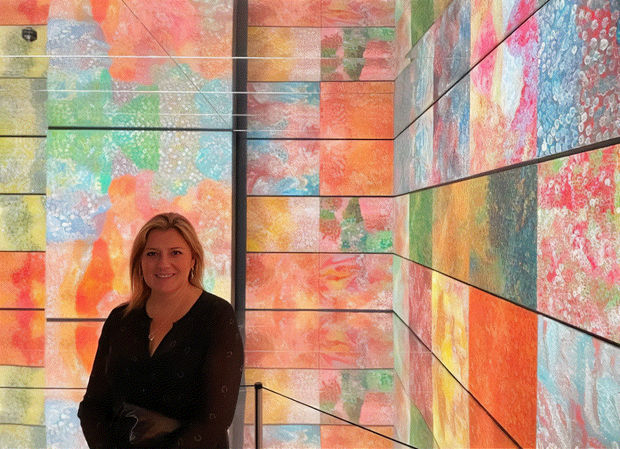
In response, Hank Ebes acquired a 2,500-square-metre warehouse in Cheltenham, Victoria. This move was more than logistical; it represented a pivotal evolution in the gallery’s story. The larger space offered the flexibility to display monumental works, host significant gatherings, and stage exhibitions that engaged the public on an unprecedented scale. Central to this transformation was the installation of the Emily Wall, a breathtaking 15.25-metre by 4.55-metre work by Emily Kame Kngwarreye. This installation became the anchor of the Cheltenham warehouse, a visual and emotional centrepiece that encapsulated the gallery’s mission: to celebrate Aboriginal art in all its grandeur while honoring the legacy of its creators.
The Cheltenham warehouse allowed AGOD to host independent auctions, spotlighting exceptional works from the Ebes Collection while continuing to support both established and emerging artists. These auctions became significant cultural events, drawing collectors, enthusiasts, and art lovers from across Australia and beyond. Equally important were the opening nights, gatherings, and private viewings, which fostered a sense of community and connection among artists, patrons, and friends of the gallery. These events were not merely commercial occasions—they were celebrations of culture, creativity, and collaboration, reflecting the vibrancy and spirit that had defined AGOD from its earliest days.
While the new warehouse offered exciting opportunities, it also came with challenges. The COVID-19 pandemic, for example, forced the gallery to make difficult decisions, including letting go of staff who had been with AGOD since the Bourke Street era. Despite these hardships, the Cheltenham space provided a foundation for resilience and adaptation, allowing the gallery to continue its work and preserve its mission even in times of uncertainty.
The Cheltenham warehouse also laid the groundwork for what would become The Emily Museum, a dedicated space within AGOD that showcased the comprehensive collection of Emily Kame Kngwarreye’s works. This museum not only honoured one of Australia’s greatest artists but also served as an educational and cultural resource, offering visitors the opportunity to engage deeply with the narratives, techniques, and history of Aboriginal art.
Through this expansion, AGOD demonstrated that a gallery could evolve with its collection, balancing the preservation of cultural heritage with innovative presentation, community engagement, and global reach. The Cheltenham warehouse became a symbol of the gallery’s growth, ambition, and enduring commitment to Aboriginal art, offering both artists and audiences a space where the full scope of creativity, history, and cultural significance could be experienced in all its richness.
-
-
FURTHER READING: THE EMILY MUSEUM
written by hank ebesON MONDAY 2 September 1996, the all-time grand old lady of contemporary Australian art passed away peacefully in the Alice Springs hospital from pneumonia aged 86. No doubt the most famous of the many brilliant Aboriginal artists responsible for the flourishing Aboriginal fine art industry, she was, in accordance with “her country’s” ancient customs, respectfully referred to as Kwementeye (pronounced Koo-man-jai) Kngwarreye around family.
Unlike our Western ways of coping with the loss of a loved one, Aboriginal sorrow business is a complicated, lengthy ritual of mourning involving several hundred members of her extended family, during which her name was unspoken for many months.
But this little old lady was not your average anonymous Aboriginal elder to be forgotten after her return to the Dreamtime. Kngwarreye was a gorgeous, regal, awe-inspiring genius who single-handedly repainted the art history books of Australia, if not the world. Without the often damaging influence on artistic creation from foreign images through books and television, Kngwarreye produced a unique vision of her country, commonly known as Utopia.
Utopia is about 1,750 square kilometres of traditional Anmatyerre and Alyawarre lands, located 275 kilometres north of Alice Springs.
In 1979, after 50 years of white control, the land was returned to the traditional owners who have lived there in family clans ever since creation, or Dreamtime. The country is arid yet spectacularly beautiful, with an annually low rainfall but with climatic extremes that make red dirt roads impassable after sudden heavy downpours during the wet season between November and April. These short-lived heaven-sent showers not only break the monotony of the 36-degree summer days, they also transform the desert into an ocean of colourful plants and wildflowers so often and so gloriously depicted in Emily’s paintings and batiks.
For Aboriginal people there is nothing more important than ‘country’ and ‘family’, in that order and complicated enough to just accept without question. Family is family. The skin names identify and classify, and everybody knows who is who and where they belong. Stories of the Dreamtime ancestors are sung, danced, and painted over and over to become etched in memory for generations to come, from ancestors long gone. Stories of creation, food gathering, history, medicine, and survival, and in general, men’s and women’s business.
Stories that explained the essence of life, the reason for being, and formed a blueprint for living in harmony with nature. Stories that were painted on skin and in sand for thousands of years before they were made permanent on silk and canvas in the late 1980s.
Most of the Utopia artists who initially became famous for their silk batiks took to the new media of acrylic paints on canvas like a goanna to a ghost gum. It was not long before masterpieces of fine art came out of the desert in bright, happy colours that could never have been produced from natural ochres. Of course, the first reaction from an uneducated public was one of scepticism. Cries of ‘abstract modern art’ and ‘not traditional’ were heard loud and clear. Mind you, there are still those who think that anything other than a bark painting is ‘non-traditional’.
It is staggering how many people have lived in Australia for generations who are totally ignorant about the differences between Aboriginal tribal groups, such as the several hundred totally different languages they speak and the various art styles resulting from the location and culture of the different communities.
Indigenous art from the ‘top end’ has nothing in common with the sand and body paintings from the Central and Western deserts. A tropical climate allows for large sheets of bark to be taken from rapidly growing trees to be flattened for shelter or art materials. The people from the Arnhem Land region and the women from Utopia have little in common; but the need to create, paint, and sing is for all indigenous people life itself.
Emily was a respected elder and inspiration to us all. She was strong-willed, demanding, tireless, and gracious with a sense of humour and loved by all. She communicated through her art with those of us who speak no ‘language’, for even though she understood English very well, she spoke very little. But when she did, it made an impact. I once suggested that she might stop painting as much as she was, considering her advanced years and the physical effort she put into each work. ‘I no paint I die,’ was the instant reply.
And heaven help you if you were within reach of the long brush she so deftly wielded with either hand, giving her a left-to-right range on the canvas of well over a metre and a half. Most of the ever-present mangy camp dogs that kept her warm on freezing nights were colour-coded on their butts for coming too near when she was painting.
For years I have avidly collected the works from Utopia. One of my first large purchases of more than 400 paintings in 1990 included a large Barbara Weir ‘bush tucker’ painting in minute dots applied with a toothpick and meticulous care. Little did I realise then that Barbara and her son Fred would become my direct link with Emily. There have been many times that I have envied the owners of specific works of art in private collections of the rich and famous. Mind you, by the time I get to see these treasures in exhibitions or museums, the owners are usually dead, which is a distinct advantage in overcoming envy.
From the day I acquired Emily’s masterpieces that feeling disappeared. If I could only pick one painting and had to live with it for the rest of my life, it would be one of Emily’s—and I would have a heck of a time choosing which one. During the seven years in which she painted on canvas, her numerous changes in style never ceased to amaze the art world. Trying to describe her paintings is foolish and quite impossible. They have to be seen to be believed.
Small dots, large dots, brilliant colours, earth ochres, white lines on black, black lines on white, coloured spaghetti, straight lines, pictures large and small—you name it, she painted it.
As an artist she is without equal, praised internationally by experts and favourably compared with superstars like Manet, Matisse, and Jackson Pollock. She built a bridge between Aboriginal art and contemporary modern art. Instead of requiring long, complicated explanations about the oldest civilisation on earth, its religious and ethnographic symbols, these almost impressionistic explosions speak for themselves. Her paintings are visual songs and a celebration of life itself.
Of course, with all the fame and fortune came the bad news. Ugly rumours of fakes and copies, graft, and corruption abounded. Interviews with so-called experts displayed their ignorance by judging the value and quality of her paintings by the thickness of the brush she used. There has been nonsense talk of her so-called ‘better’ early works, traditional works, typical works, and those produced when she lost her eyesight.
It seems media hype and gutter journalism, fanned by greed-motivated jealousies, sells better than just simple facts.
Well looked after and always surrounded by friends and family, Emily lived a long and happy life. Most of the negative stress came from ignorance and fantasy, and fortunately she was not aware of the rubbish that surrounded the legend.
August 1996 was an amazing month. Worried about Emily’s health, Fred and family had advised me in April, just before their visit to Belgium to see a massive installation of 53 of her paintings on one wall in the touring Aboriginal art exhibition Nangara, that her career should come to an end because of health reasons. Having never dealt with her directly, we unconditionally accepted the wishes of her family but were thrilled to hear in July that she gained weight and was anxious to paint the canvasses we had supplied earlier in the year. It was the last time I spoke to her. Only the words ‘ank’ and ‘paint’ came through loud and clear among lengthy Anmatyerre words I could not understand when she cheerfully rang me from Alice Springs on a sunny Sunday afternoon.
Fred assured me she was happy and raring to go, and the result was magic. The last two consignments of eight and nine paintings in various sizes were stunning as usual. The last nine were finished only a couple of days before she passed away while the family was in Sydney for an exhibition. There was no time to say goodbye.
We asked the family to guide us with regards to proper respects and were invited to spend a day in Utopia with around 200 family members during the sorrow business. It was an emotional experience never to be forgotten.
Shortly before her death came the greatest surprise of them all. Over three days, on 17-18 August 1996, Emily created a series of 24 small to medium-sized works (including one three by two metres) that were painted in a totally different style from anything she had produced previously. Even after seeing over a thousand of her paintings, in many collections, which she produced daily for several years, these took my breath away. From the now familiar dot and line paintings, she moved effortlessly into shapes and fields of colour, using a three-inch-wide brush. The closest comparisons I can give are the famous and often reproduced landscapes by Willem de Kooning and British artist Howard Hodgkin. De Kooning’s 1960 Door to the River, Pastorale, and Suburb in Havana have the same aura about them, as do Hodgkin’s works from the late 1980s, before Emily started working on canvas.
Because only one series in this style was produced, the decision was made not to sell them just yet but to divide them between the Ebes Collection and members of her family.
Now, six years later, 13 of these last and probably greatest works of her short brilliant career (an estimated 3,500 works on canvas in just seven years) form part of more than 200 carefully selected paintings to create The Emily Museum Collection.
With the benefit of hindsight, nobody would dispute the decision to create (with 200 family-owned paintings) the Vincent Van Gogh Museum in Amsterdam in the 1970s, even though the artist was ignored in his own lifetime (he created 1,600 works in 10 years)—unlike Emily, who was a living legend, with her first works purchased by the National Gallery of Australia, Canberra as early as 1991. The same rationale applies to museums dedicated to Picasso, Dali, Matisse, and Rubens.
The Emily Museum is for Australia no less a forgone conclusion, to be realised with foresight and determination. Genius is rare and not to be wasted. Emily qualifies on every level. All we need now is an appropriate location in the heart of the city or a couple of hundred million dollars and Frank Gehry to build it and M’s your aunty.
-
-
Her work was voluntary in those early years, yet carried with it the dedication and thoroughness of a professional calling. Tara involved herself in the practical processes of art preparation, assisting with the stretching and gessoing of canvases, carefully learning the steps that preceded the creation of a painting. She gained an appreciation not only for the finished works that hung on the gallery walls, but also for the physical and spiritual labour invested in their making. At the same time, she cultivated a meticulous approach to organisation. Each artwork that passed through the gallery’s hands was recorded with precision: photographed, measured, catalogued, and attributed with detailed notes on the artist, the story, and the moment of its creation. She understood that these records were more than administrative tasks—they were an enduring archive that safeguarded cultural memory while also allowing curators, collectors, and institutions to engage with Aboriginal art through an informed and accurate lens.
This fusion of immersion, discipline, and voluntary effort forged the foundation of Tara’s leadership long before she formally assumed the role of Managing Director. Her deep respect for tradition was never separated from her eye for the future; she came to recognise that the strength of the gallery did not lie solely in its ability to sell and exhibit art, but in its ability to preserve, organise, and honour the narratives behind each piece. The systems she established in cataloguing and documentation were not only practical necessities but also safeguards of cultural and historical integrity, enabling AGOD to build a reputation of professionalism and trust on both national and international stages.
By the time she stepped into her father’s shoes, Tara was not simply continuing a legacy—she had already shaped its very structure. Her years of firsthand relationships with artists, and her immersion in both the creative and organisational aspects of the business ensured that AGOD’s foundations were stronger, more resilient, and more deeply attuned to the cultural weight of the works it represented. With her sons, Jack and Fraser McCullough, assistance in contributing to the gallery’s direction, the standards she set continue to guide its operations, reflecting a philosophy that family, culture, and art are inseparable threads in the story of the Aboriginal Gallery of Dreamings.
-
-
Celebrating 30 years of Nangara
In 2026, the Aboriginal Gallery of Dreamings marks a profound milestone: the 30-year anniversary of the Nangara exhibition. First held in 1996, Nangara was a turning point for the gallery and for the broader recognition of Aboriginal art. The exhibition featured the iconic Emily Wall alongside over 350 works by more than 180 Aboriginal artists, presenting an unprecedented spectrum of talent, style, and cultural narrative. It was more than an exhibition—it was an immersive celebration of Central Desert storytelling, bridging generations and offering audiences a rare insight into the heart of Aboriginal creativity.
Central to this legacy is Emily Kame Kngwarreye, one of Australia’s most significant artists. Her prolific yet relatively brief career challenged conventional notions of contemporary art while honouring the oldest continuous culture on Earth. Emily’s canvases have inspired audiences worldwide, and The Emily Museum within AGOD stands as a lasting testament to her influence, preserving a comprehensive collection and ensuring her artistic voice continues to resonate across generations.
The 30-year celebration of Nangara not only commemorates Emily’s work but also reflects the gallery’s decades-long commitment to elevating Aboriginal art nationally and internationally. Through landmark exhibitions, collaborations with galleries such as UNIT X in London and Anzai Gallery in Melbourne, and participation in prestigious fairs across Europe, Japan, and the United States, AGOD has consistently showcased the depth, vitality, and diversity of Indigenous creativity.
Beyond exhibitions, the gallery has championed education and cultural engagement, creating opportunities for audiences to understand the stories, customs, and Dreamtime narratives embedded within each work. Through special events, opening nights, and artist gatherings, AGOD has cultivated spaces for dialogue, reflection, and shared appreciation, positioning the gallery not merely as a commercial institution but as a custodian of cultural heritage.
The story of AGOD is also one of perseverance. From navigating international markets to overcoming challenges like the COVID-19 pandemic, the gallery has remained steadfast in its mission to preserve, celebrate, and promote Aboriginal art. Under the leadership of Tara Ebes and her family, AGOD continues to evolve, honouring its past while shaping the future of Aboriginal artistic recognition.
As the gallery looks ahead, the 30-year celebration of Nangara stands as both a reflection and a promise: to continue championing Aboriginal artists, to share their creativity with the world, and to safeguard a cultural legacy that is timeless, dynamic, and ever-expanding.
We stand in awe of what Hank Ebes has achieved in a single lifetime—an accomplishment that would be unfathomable for most. Through vision, dedication, and an unrelenting passion for art and culture, he created an institution that few could have imagined—a gallery that not only preserves and celebrates Aboriginal creativity but also brings its depth, spirit, and stories to the world. His achievements are a testament to the power of curiosity, care, and commitment, inspiring everyone who engages with the Aboriginal Gallery of Dreamings. As we step into the next chapter, we do so with wonder at what has been built, respect for the foundations laid, and excitement for the future that will continue to honour and expand Hank’s extraordinary legacy.
Thank you Hank.